
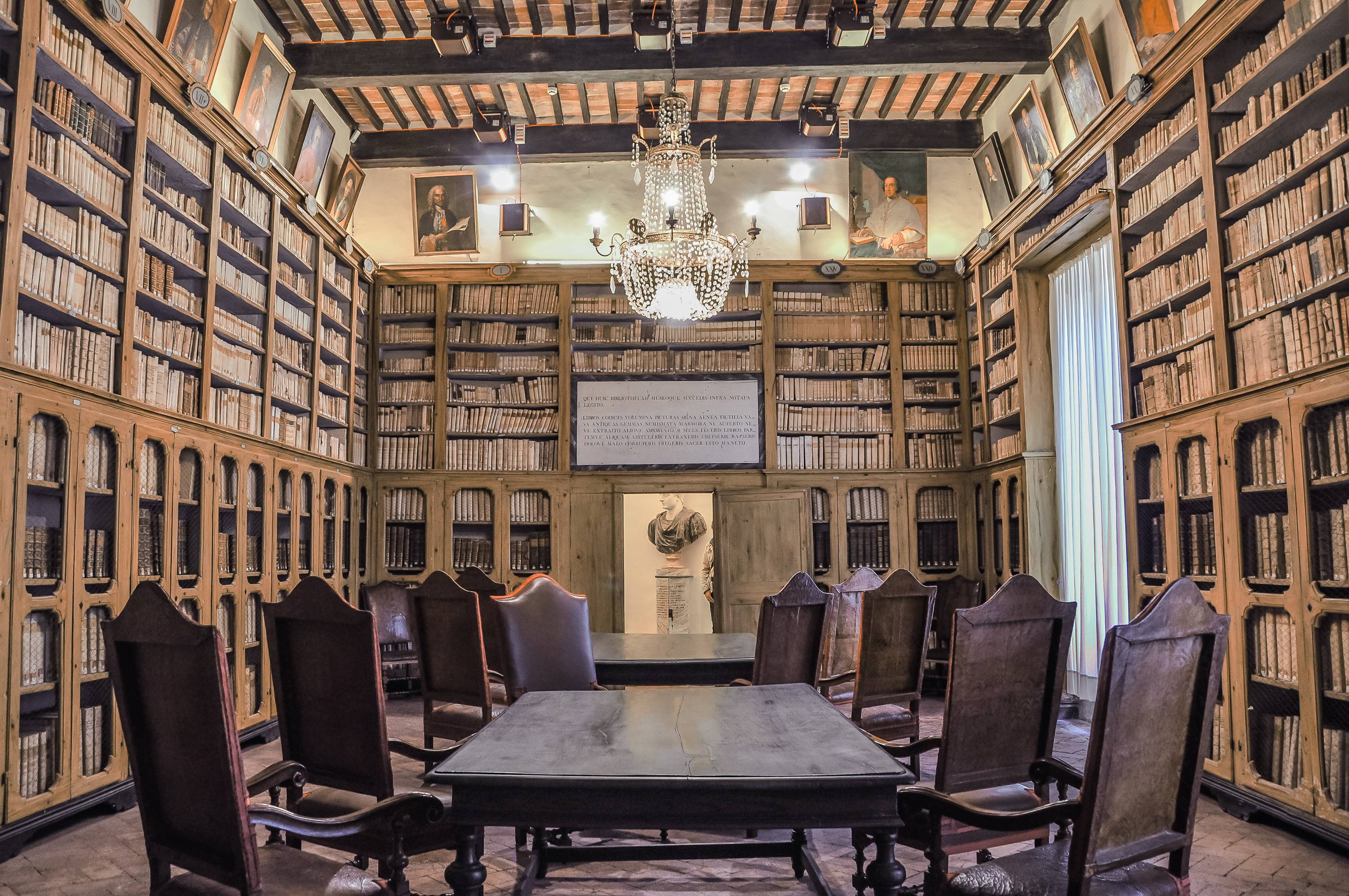
The MAEC occupies Palazzo Casali, in the heart of Cortona, and tells the story of the city across a vast span of time. The visit moves through archaeology, the history of the Etruscan Academy, painting and modern art, showing how Cortona has continued to question and preserve its past.
The Tabula Cortonensis and the Etruscan lamp
Among the most famous finds are the Tabula Cortonensis, one of the longest known Etruscan texts, and the large bronze lamp from the 4th century BC. The gold fibula, the grave goods and the objects from the surrounding territory bring us close to the life, rituals and refinement of a civilization that left a decisive mark on the valley.
From Signorelli to Gino Severini
The itinerary does not stop at antiquity. Works by Luca Signorelli, eighteenth-century evidence and works by Gino Severini lead toward modern Cortona. It is this continuity that makes the MAEC special: the museum presents not a frozen city, but a place that has been able to reinterpret itself across the centuries.