
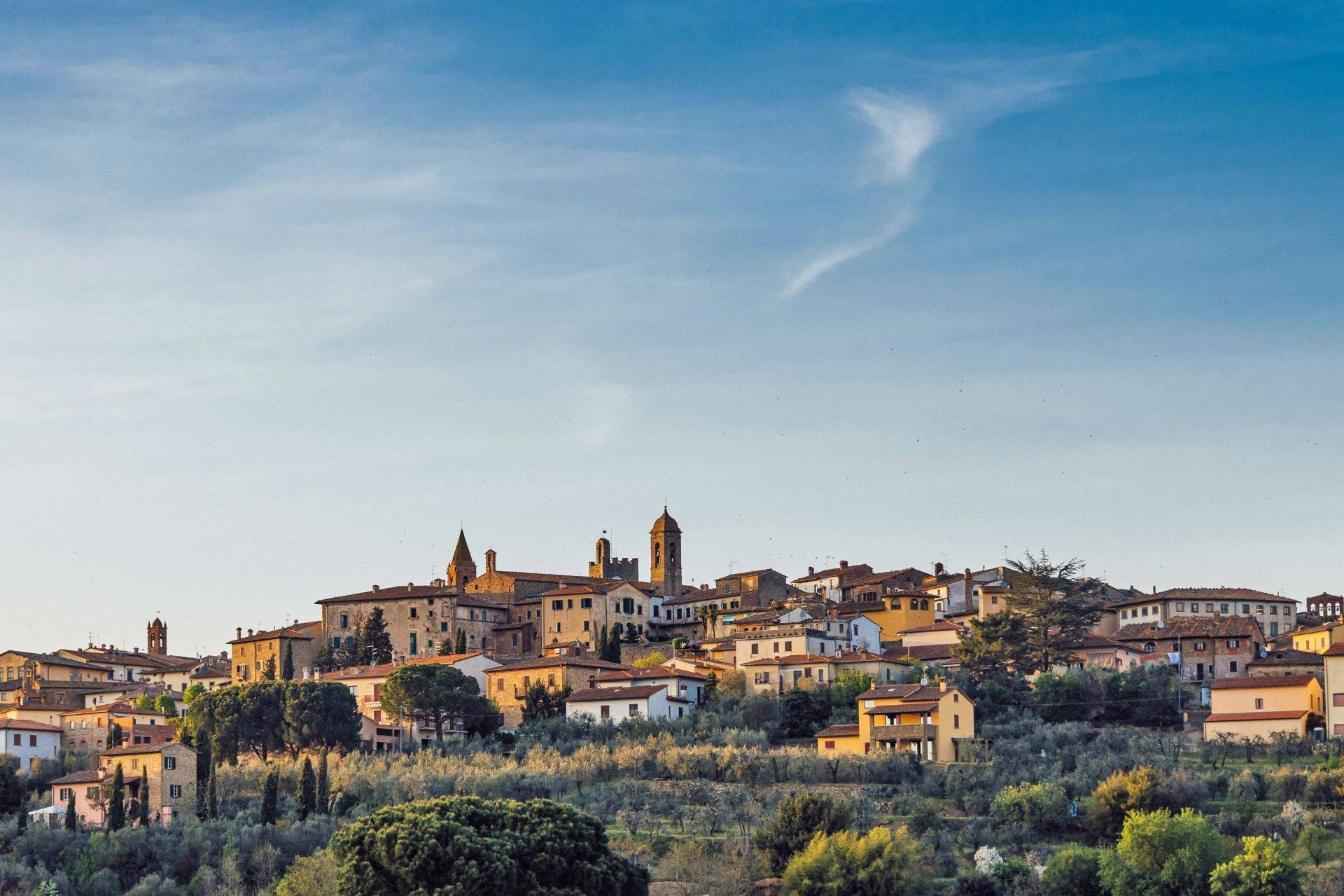
Monte San Savino is a refined cradle of art whose architectural beauty is owed to the noble Del Monte family and the genius of the great Renaissance sculptor Andrea Sansovino. The village stands out for its stately palaces, airy loggias and rusticated portals, which give the centre an aristocratic and cultured air, enriched by a centuries-old and lively artisan tradition.
Art and Culture
Strolling along the monumental Corso Sangallo, the main attraction is the Palazzo di Monte, designed by Antonio da Sangallo the Elder, which hides behind it a splendid Renaissance Hanging Garden with panoramic views over the valley. Opposite is the Market Loggia, a masterpiece of symmetry attributed to Andrea Sansovino. Do not forget to visit the Cassero Museum Complex, which displays the superb collection of Savinese ceramics and terracottas, a craft art active since the fourteenth century.
Nature and Outdoors
The Savinese hills gently slope down toward the valley and offer paths ideal for relaxing walks among olive groves and rows of vines. A few kilometres from the centre stands the splendid Sanctuary of Santa Maria delle Vertighe, surrounded by a large green park, an ideal place to stroll in the shade and admire the thirteenth-century frescoes preserved inside.
Food and Wine
Monte San Savino is the undisputed home of Porchetta, a nationally renowned and protected gastronomic specialty. It is prepared by boning the pork and seasoning it strictly by hand with salt, pepper, garlic and abundant wild fennel flowers gathered on the local hills, then slow-cooked for hours in wood-fired ovens according to traditional recipes. The village is a key stop for residential food and wine itineraries dedicated to the pursuit of flavour.
Religious Routes and Historical Memories
In the historic centre, the Church of San Giovanni deserves careful attention, housing a splendid glazed terracotta altar by Sansovino. Of great historical interest is the nearby Synagogue with the Jewish Ghetto, a precious testimony to a Jewish community that lived and remained fully integrated in the village from the seventeenth century until the early twentieth century.
The place on video
Turn on the sound and discover the full story.